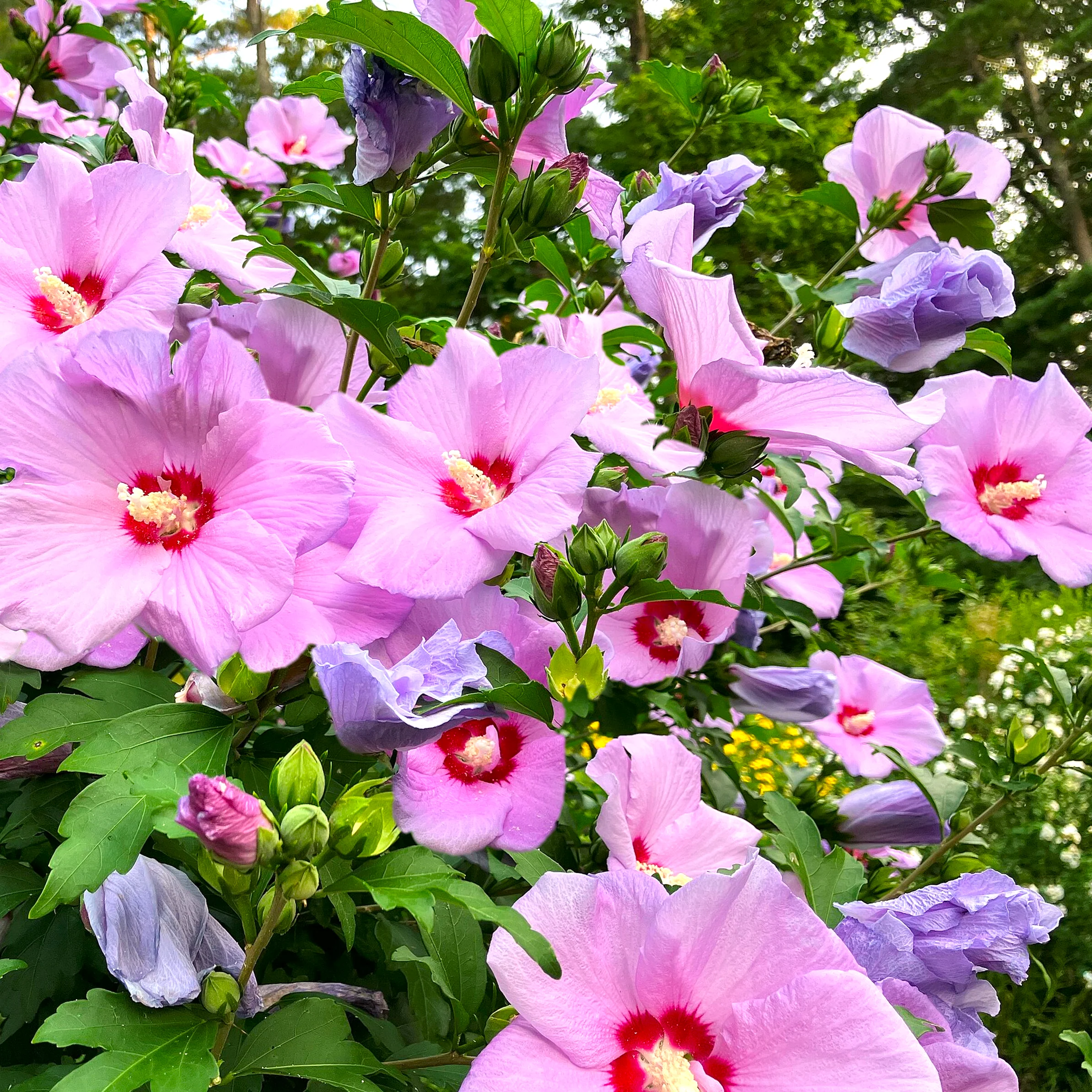
Rose of Sharon
Also Known As: Shrub Althea, Shrub Mallow, Korean National Flower, Althea, Chinese Hibiscus, Hibiscus Syriacus, Korean Rose, Mugunghwa, Syrian Ketmia, Tree Mallow, Common Hibiscus, Sharon Hibiscus.
| Plant Name: | Hibiscus, Rose of Sharon |
| Latin Name: | Hibiscus syriacus |
| Days to Germinate: | 7-14 |
| Plant Height: | 7 - 13 Feet |
| Spread: | 4 - 10 Feet |
| Growth Habit: | Shrub |
| USDA Zones: | 5-9 |
| Lifespan: | Perennial |
| Brand: | TomorrowSeeds |
| Sunlight: | Full Sun, Partial Shade |
| Pollination: | Heirloom, Open-Pollinated |
| GMO: | No |
| Fungicide-Treated Seeds*: | No |
| Seeds Packed For**: | 2026 |
**Seeds are freshly packed for the growing season of the year listed. Seeds are still viable beyond pack date. Store in a cool and dry location such as the refrigerator or basement to best preserve germination rates.
Planting Instructions:
Soil Preparation:
Choose an area with heavy, well-draining soil that receives at least 6 hours of sunlight each day. Remove weeds, large rocks, and litter from the planting area. Leave small weeds and dead grass, they will enrich the soil when turned under. Spade or till the soil 6-8 inches deep. Loosening the soil will help the plant establish strong roots. If the soil is heavy or clay-like, mix in some sand or compost to improve drainage. Optionally, form rows of soil beds 4-6 inches high and at least 6 feet apart. This formation of ridges will help with drainage, ensure good airflow, and make harvesting for cut flowers easier. Lay down 1/2"-3/4" peat moss, sawdust, or potting soil, the soil surface. This layer is beneficial for flower seeds because it can the improve the germination environment and prevent soil crusting.
Planting:
Optionally, scarification can help speed germination. Use sandpaper or a file to break the hard coat before sowing. For earlier Rose Mallow blooms, you may optionally start planting indoors in containers 4-6 weeks before the last expected frost date in Spring, keeping seedlings at least 65F. Harden off then transplant seedlings outdoors in a sunny location when temperatures are consistently above 60F. To transplant seedlings, prepare a transplant hole outdoors in a sunny location. Remove the plants carefully from the pots or flats and set them in the transplant holes, burying some of the stem in the ground. Pack the soil loosely around the plant and leave a slightly sunken area around each plant to hold water. Water the plants after transplanting.Directly Sowing: If directly sowing outdoors, plant after all danger of frost has passed in spring and soil temperatures reach at least 60F. Fall planting is not recommended unless planting outdoors in environments with mild, frost-free winters for a head start in the following spring, or planting indoors with supplemental grow lights.
To plant, make holes 1/4 inch deep and spaced 6-10 feet apart down the rows of raised beds. Plant 1-3 seeds per hole, then cover thinly with soil. Water after planting.
| Planting Depth: | 1/4 inch |
| Within-Row Spacing: | 6-10 feet |
| Between-Row Spacing: | 10-20 feet |
Care During the Season:
Rose of Sharon can be planted closer together for a continuous hedge, but may require more pruning. Provide deep and regular watering particularly during its first year and through any summer drought periods to encourage robust blooming. For established shrubs, water only when needed as they tolerate drought, but avoid letting the soil become waterlogged. If your soil is poor, apply a balanced, slow-release fertilizer in early spring; otherwise, feeding is often unnecessary. Avoid significant pruning during the growing season as the shrub blooms on new wood, but feel free to deadhead spent flowers to encourage tidiness and minimize unwanted self-seeding. Monitor for pests and maintain a layer of mulch around the base to retain moisture and suppress weeds.
Also Known As: Shrub Althea, Shrub Mallow, Korean National Flower, Althea, Chinese Hibiscus, Hibiscus Syriacus, Korean Rose, Mugunghwa, Syrian Ketmia, Tree Mallow, Common Hibiscus, Sharon Hibiscus.
| Plant Name: | Hibiscus, Rose of Sharon |
| Latin Name: | Hibiscus syriacus |
| Days to Germinate: | 7-14 |
| Plant Height: | 7 - 13 Feet |
| Spread: | 4 - 10 Feet |
| Growth Habit: | Shrub |
| USDA Zones: | 5-9 |
| Lifespan: | Perennial |
| Brand: | TomorrowSeeds |
| Sunlight: | Full Sun, Partial Shade |
| Pollination: | Heirloom, Open-Pollinated |
| GMO: | No |
| Fungicide-Treated Seeds*: | No |
| Seeds Packed For**: | 2026 |
**Seeds are freshly packed for the growing season of the year listed. Seeds are still viable beyond pack date. Store in a cool and dry location such as the refrigerator or basement to best preserve germination rates.
Planting Instructions:
Soil Preparation:
Choose an area with heavy, well-draining soil that receives at least 6 hours of sunlight each day. Remove weeds, large rocks, and litter from the planting area. Leave small weeds and dead grass, they will enrich the soil when turned under. Spade or till the soil 6-8 inches deep. Loosening the soil will help the plant establish strong roots. If the soil is heavy or clay-like, mix in some sand or compost to improve drainage. Optionally, form rows of soil beds 4-6 inches high and at least 6 feet apart. This formation of ridges will help with drainage, ensure good airflow, and make harvesting for cut flowers easier. Lay down 1/2"-3/4" peat moss, sawdust, or potting soil, the soil surface. This layer is beneficial for flower seeds because it can the improve the germination environment and prevent soil crusting.
Planting:
Optionally, scarification can help speed germination. Use sandpaper or a file to break the hard coat before sowing. For earlier Rose Mallow blooms, you may optionally start planting indoors in containers 4-6 weeks before the last expected frost date in Spring, keeping seedlings at least 65F. Harden off then transplant seedlings outdoors in a sunny location when temperatures are consistently above 60F. To transplant seedlings, prepare a transplant hole outdoors in a sunny location. Remove the plants carefully from the pots or flats and set them in the transplant holes, burying some of the stem in the ground. Pack the soil loosely around the plant and leave a slightly sunken area around each plant to hold water. Water the plants after transplanting.Directly Sowing: If directly sowing outdoors, plant after all danger of frost has passed in spring and soil temperatures reach at least 60F. Fall planting is not recommended unless planting outdoors in environments with mild, frost-free winters for a head start in the following spring, or planting indoors with supplemental grow lights.
To plant, make holes 1/4 inch deep and spaced 6-10 feet apart down the rows of raised beds. Plant 1-3 seeds per hole, then cover thinly with soil. Water after planting.
| Planting Depth: | 1/4 inch |
| Within-Row Spacing: | 6-10 feet |
| Between-Row Spacing: | 10-20 feet |
Care During the Season:
Rose of Sharon can be planted closer together for a continuous hedge, but may require more pruning. Provide deep and regular watering particularly during its first year and through any summer drought periods to encourage robust blooming. For established shrubs, water only when needed as they tolerate drought, but avoid letting the soil become waterlogged. If your soil is poor, apply a balanced, slow-release fertilizer in early spring; otherwise, feeding is often unnecessary. Avoid significant pruning during the growing season as the shrub blooms on new wood, but feel free to deadhead spent flowers to encourage tidiness and minimize unwanted self-seeding. Monitor for pests and maintain a layer of mulch around the base to retain moisture and suppress weeds.
Original: $4.95
-70%$4.95
$1.49Description
Also Known As: Shrub Althea, Shrub Mallow, Korean National Flower, Althea, Chinese Hibiscus, Hibiscus Syriacus, Korean Rose, Mugunghwa, Syrian Ketmia, Tree Mallow, Common Hibiscus, Sharon Hibiscus.
| Plant Name: | Hibiscus, Rose of Sharon |
| Latin Name: | Hibiscus syriacus |
| Days to Germinate: | 7-14 |
| Plant Height: | 7 - 13 Feet |
| Spread: | 4 - 10 Feet |
| Growth Habit: | Shrub |
| USDA Zones: | 5-9 |
| Lifespan: | Perennial |
| Brand: | TomorrowSeeds |
| Sunlight: | Full Sun, Partial Shade |
| Pollination: | Heirloom, Open-Pollinated |
| GMO: | No |
| Fungicide-Treated Seeds*: | No |
| Seeds Packed For**: | 2026 |
**Seeds are freshly packed for the growing season of the year listed. Seeds are still viable beyond pack date. Store in a cool and dry location such as the refrigerator or basement to best preserve germination rates.
Planting Instructions:
Soil Preparation:
Choose an area with heavy, well-draining soil that receives at least 6 hours of sunlight each day. Remove weeds, large rocks, and litter from the planting area. Leave small weeds and dead grass, they will enrich the soil when turned under. Spade or till the soil 6-8 inches deep. Loosening the soil will help the plant establish strong roots. If the soil is heavy or clay-like, mix in some sand or compost to improve drainage. Optionally, form rows of soil beds 4-6 inches high and at least 6 feet apart. This formation of ridges will help with drainage, ensure good airflow, and make harvesting for cut flowers easier. Lay down 1/2"-3/4" peat moss, sawdust, or potting soil, the soil surface. This layer is beneficial for flower seeds because it can the improve the germination environment and prevent soil crusting.
Planting:
Optionally, scarification can help speed germination. Use sandpaper or a file to break the hard coat before sowing. For earlier Rose Mallow blooms, you may optionally start planting indoors in containers 4-6 weeks before the last expected frost date in Spring, keeping seedlings at least 65F. Harden off then transplant seedlings outdoors in a sunny location when temperatures are consistently above 60F. To transplant seedlings, prepare a transplant hole outdoors in a sunny location. Remove the plants carefully from the pots or flats and set them in the transplant holes, burying some of the stem in the ground. Pack the soil loosely around the plant and leave a slightly sunken area around each plant to hold water. Water the plants after transplanting.Directly Sowing: If directly sowing outdoors, plant after all danger of frost has passed in spring and soil temperatures reach at least 60F. Fall planting is not recommended unless planting outdoors in environments with mild, frost-free winters for a head start in the following spring, or planting indoors with supplemental grow lights.
To plant, make holes 1/4 inch deep and spaced 6-10 feet apart down the rows of raised beds. Plant 1-3 seeds per hole, then cover thinly with soil. Water after planting.
| Planting Depth: | 1/4 inch |
| Within-Row Spacing: | 6-10 feet |
| Between-Row Spacing: | 10-20 feet |
Care During the Season:
Rose of Sharon can be planted closer together for a continuous hedge, but may require more pruning. Provide deep and regular watering particularly during its first year and through any summer drought periods to encourage robust blooming. For established shrubs, water only when needed as they tolerate drought, but avoid letting the soil become waterlogged. If your soil is poor, apply a balanced, slow-release fertilizer in early spring; otherwise, feeding is often unnecessary. Avoid significant pruning during the growing season as the shrub blooms on new wood, but feel free to deadhead spent flowers to encourage tidiness and minimize unwanted self-seeding. Monitor for pests and maintain a layer of mulch around the base to retain moisture and suppress weeds.